Archive for the category

Cross-Elasticity

Which competitor takes your volume when they move their price, and which one only sits next to you on the shelf. How to read it, and where it misleads.

A step of the Pricing & Promo Story and the Competitive Story.

Responding to a competitor price cut: match it or hold your price
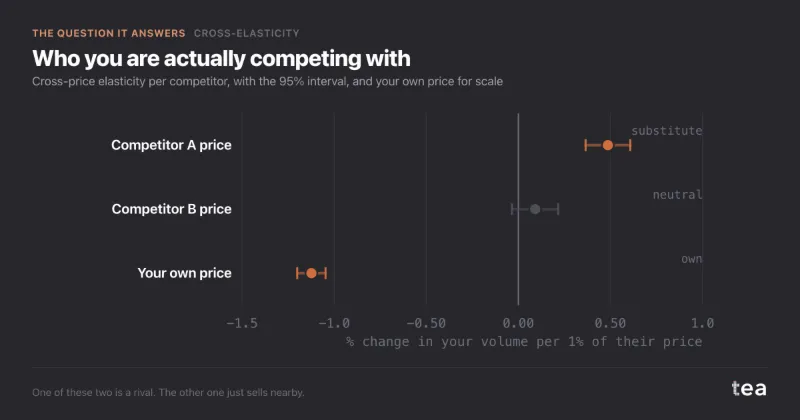
This is the table to have open when a competitor announces a promotion, and it takes about a minute to read.

Your volume index if their price moves and you do nothing:

Continue reading →

Filed under Cross-Elasticity  |  Permalink
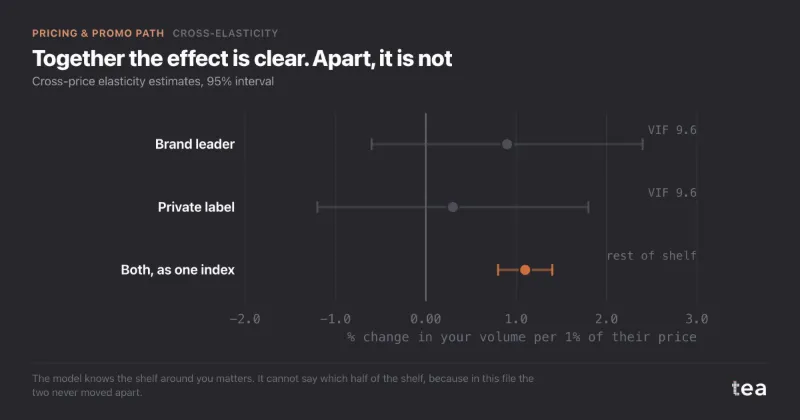
Cross-elasticity when competitor prices are only monthly

Olive oil brand, one-litre bottles in Italian grocery, asking whether the brand leader or the private label is its real competitor.

A composite case, built from the kind of file we see most weeks. An olive oil brand selling one-litre bottles of extra virgin through Italian grocery, a solid number three in the category behind the brand leader and the retailers' private labels. Over the winter, olive oil costs pushed every shelf price up, and the brand found itself in a familiar argument.

Continue reading →

Filed under Cross-Elasticity  |  Pricing & Promo Story  |  Permalink

Rolling cross-elasticity: checking whether a rivalry is stable

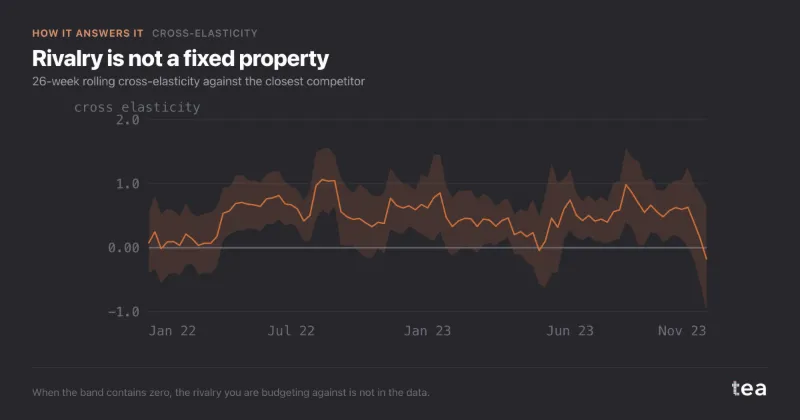
Rivalry is not a fixed property of two brands. It is a measurement of a period, and this is what it looks like when you let it move.

The line is the cross-elasticity against the closest competitor, estimated on a rolling 26 week window. The band is the 95% interval.

Continue reading →

Filed under Cross-Elasticity  |  Permalink
Cross-price elasticity: which competitor actually takes your volume

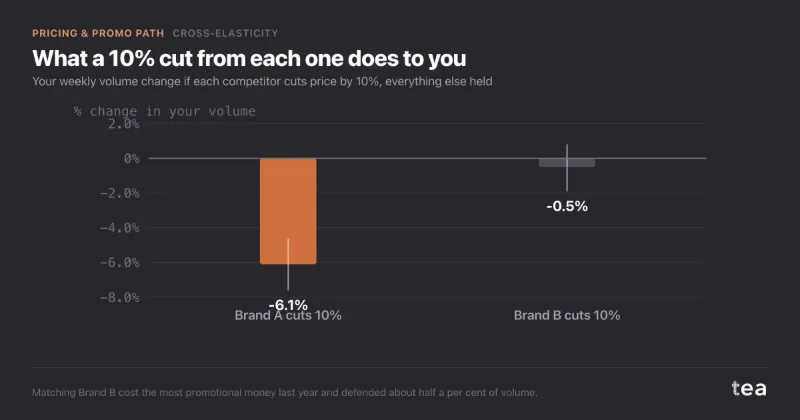
Dry cat food brand in French grocery, about 25,000 bags a week, asking whether to keep matching a neighbouring brand's price cuts.

A composite case, built from the kind of file we see most weeks. A dry cat food brand sold in French grocery, 2 kg bags at €9.90, about 25,000 bags a week. Two other brands mattered in the category conversation. Brand A, a national brand at a similar price. And Brand B, a slightly more premium brand that sat right next to it on most shelves and promoted often.

Continue reading →

Filed under Cross-Elasticity  |  Pricing & Promo Story  |  Permalink

A new entrant after ten weeks: too few to measure cross-elasticity

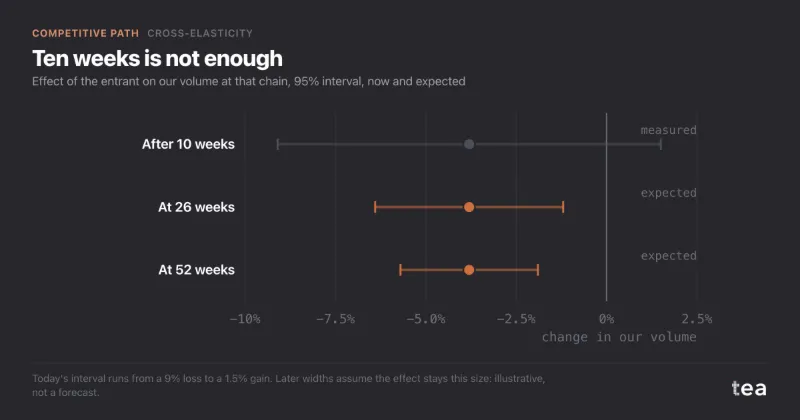
UK coffee capsule brand, about £21M a year, asking how much volume a ten-week-old entrant was taking at one chain.

A composite case, built from a situation we meet every few months: a UK brand of compatible coffee capsules, about £21M a year through grocery and online, listed at four large chains. Ten weeks before the file reached us, a new value brand launched at one of the four, priced 22% below it per capsule.

Continue reading →

Filed under Cross-Elasticity  |  Competitive Story  |  Permalink

Competitor discount week: 2.1% of our volume, not the feared 8%

Spanish jarred pasta sauce brand, about €240,000 of weekly sales, asking how much a rival's discount week really took.

A composite case, built from the kind of file we see most weeks: a Spanish brand of jarred pasta sauces selling around 98,000 jars a week through grocery, about €240,000 of weekly retail sales at an average shelf price of €2.45.

Continue reading →

Filed under Cross-Elasticity  |  Competitive Story  |  Permalink

Cross-price elasticity: telling real rivals from shelf neighbours

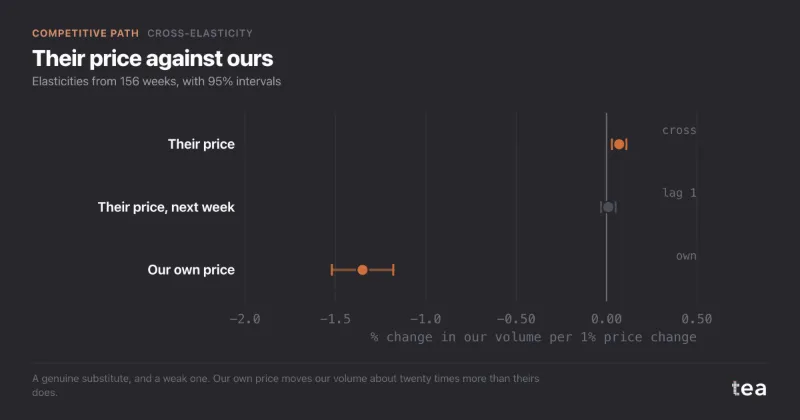
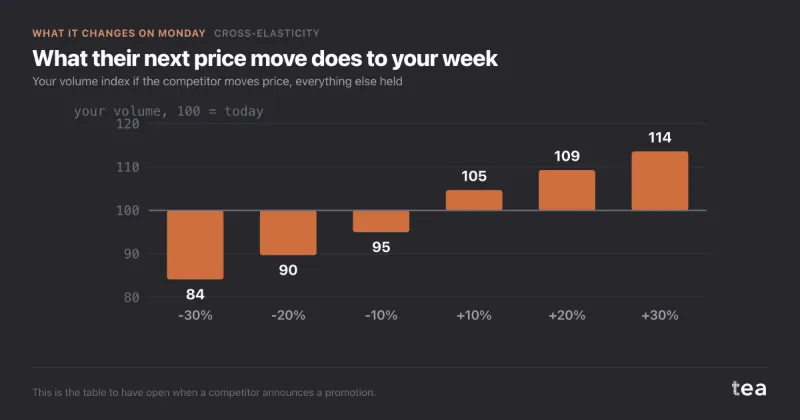
Two competitors on the shelf next to you. One of them is a rival. The other one just sells nearby, and this chart is how you tell them apart.

Competitor A: cross-elasticity 0.49, with a 95% interval from 0.37 to 0.61. When their price goes up 1%, your volume goes up about half a percent. That is a substitute, and it is the brand you are actually competing with.

Continue reading →

Filed under Cross-Elasticity  |  Permalink